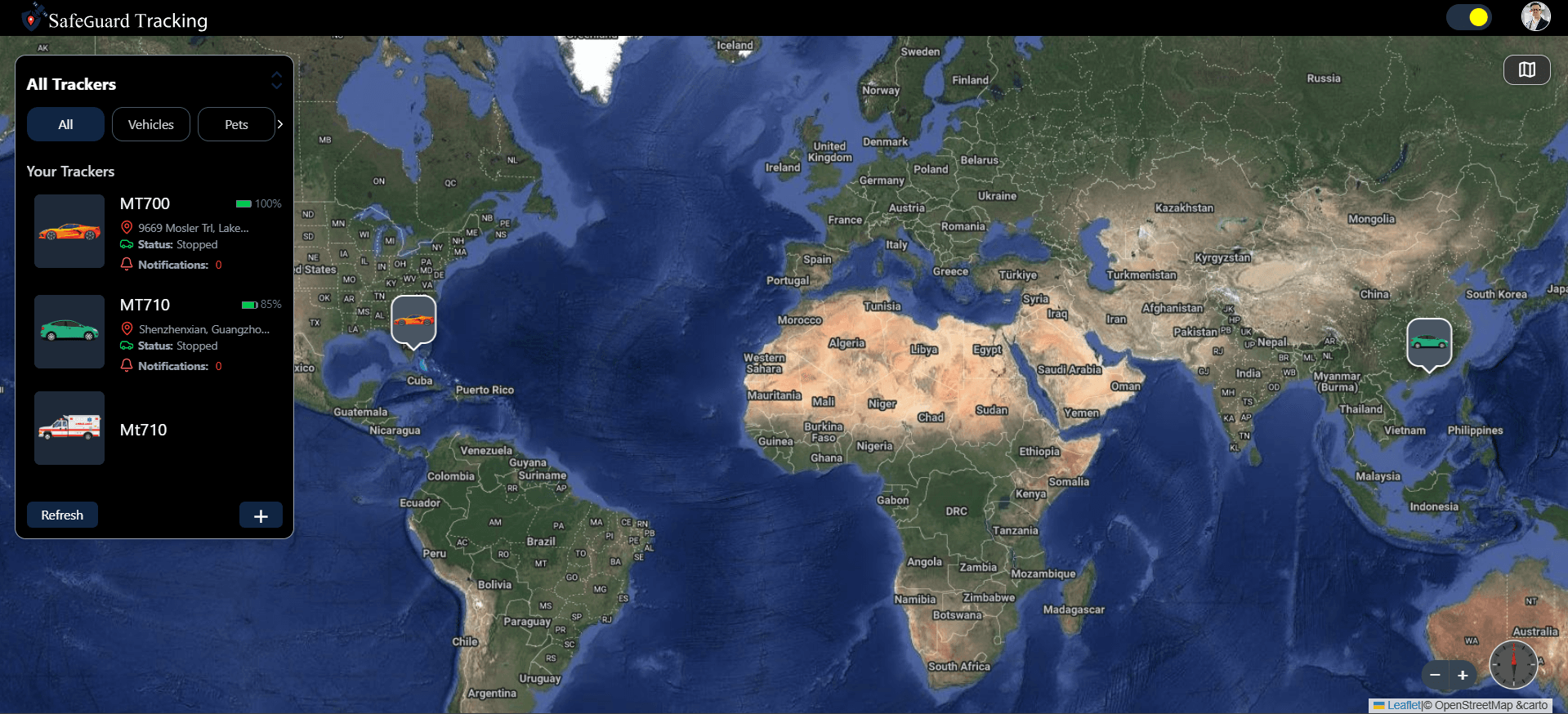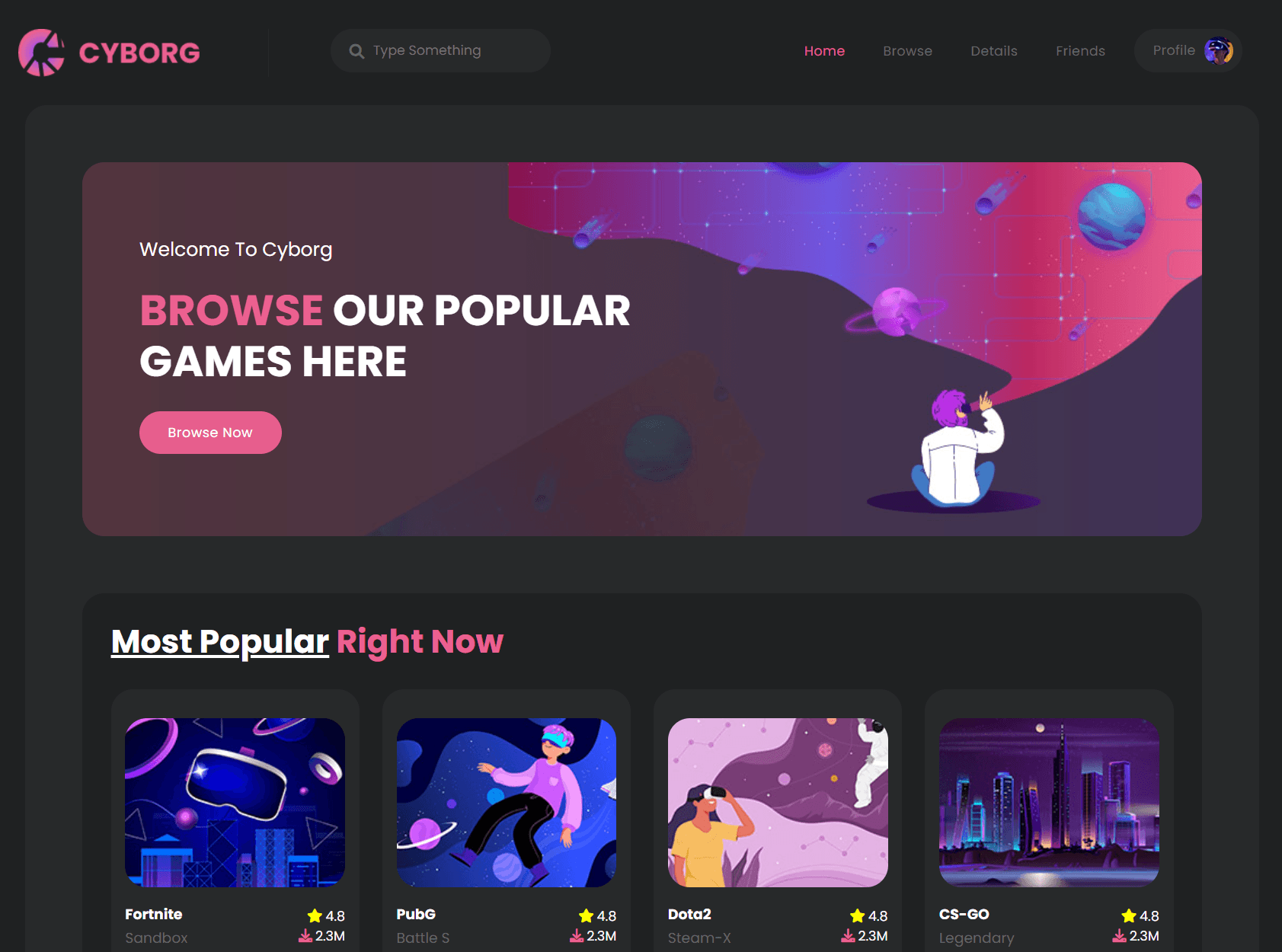
Cyborg Gaming is a gaming community platform, and as its Lead Backend Developer I built the Node.js gaming platform backend behind it. An Express and MongoDB API handles game discovery and cross-platform sync with Steam, Epic and Xbox Live behind JWT-secured REST endpoints, while Socket.IO carries live chat and notifications at around 300ms latency. The platform held 99.8% uptime through a 200% launch traffic surge.
The problem
A gaming platform is tested hardest at the moments it can least afford to fail, and launch is the first of them. Players arrive together, open chats, refresh friend lists and search for games all at once. A backend that only performs well at normal load is one that falls over on the day people form their opinion of the product.
The platform also depended on services it did not control. Players link accounts from Steam, Epic and Xbox Live, and each of those has its own API, its own authentication flow and its own idea of what a game record looks like. On top of that sat the community side: live chat and notifications that are only useful if they arrive while the conversation is still happening.
My role
I was the Lead Backend Developer. I owned the Node.js and Express API, the MongoDB data model and its indexes, the Socket.IO real-time layer, JWT authentication, and the integrations with the three gaming platforms. That made me responsible for the decisions in this case study as well as for how the system behaved under the launch load.
Architecture and tech stack
Express REST APIs secured with JWT
Most requests on a gaming platform are small and frequent: a profile, a friend list, a page of results. Signed JSON Web Tokens let each request be verified from the token itself, without a session lookup on every call, which keeps per-request work low at exactly the moment traffic spikes.
MongoDB schemas shaped around discovery queries
Game discovery is read-heavy and filtered several ways at once. I shaped the documents around how discovery reads them, then indexed the fields those queries filter and sort on, so a search uses an index instead of scanning a growing collection. That work made queries 40% faster.
Socket.IO for chat and notifications
Chat and notifications need the server to push, not wait to be asked. Socket.IO gives a persistent two-way connection and falls back to HTTP long-polling on networks that block WebSockets, which matters when players connect from all kinds of home and campus networks. Messages and notifications arrive at around 300ms latency. I have used the same library for live device markers in SafeGuard Tracking, a real-time GPS dashboard.
Connection pooling and centralised error handling
Opening a fresh database connection per request is cheap at low traffic and ruinous at high traffic. A shared connection pool reuses a fixed set of connections, and error-handling middleware catches failures in one request before they can take the process down for everyone else. Together they are what the 99.8% uptime figure rests on.
Key features
- JWT-secured REST APIs for the platform's community and discovery features.
- Steam, Epic and Xbox Live integrations for cross-platform sync of a player's accounts.
- Live chat and notifications over Socket.IO, at around 300ms latency.
- Game discovery on indexed MongoDB queries, 40% faster after schema and index work.
- Connection pooling and error handling behind 99.8% uptime.
- Launch capacity: the backend absorbed a 200% traffic surge at launch.
Challenges and how I solved them
Surviving the launch spike
- Problem
- Launch traffic does not grow gradually. The platform saw a 200% surge, and any request that held a database connection too long or crashed on an unexpected input would have cascaded into an outage at the worst possible time.
- Solution
- Pooled connections capped the load on the database, indexed queries kept each request short, and centralised error handling contained failures to the request that caused them. The service stayed at 99.8% uptime through the surge.
Three platforms, three different answers
- Problem
- Steam, Epic and Xbox Live each describe a player and a game differently, with their own authentication and their own failure modes. Letting those differences leak into the rest of the API would have meant every feature carrying three special cases.
- Solution
- Each integration translates its platform's responses into one internal shape before the data reaches the rest of the backend, so discovery and community features work the same way wherever a game came from.
Real-time messages under load
- Problem
- A chat message that arrives several seconds late reads as a broken feature. With many players connected at once, sending every event to every socket would have spent most of the server's time on messages nobody needed.
- Solution
- Events are routed only to the players a message or notification concerns, using Socket.IO rooms, which keeps fan-out proportional to who is actually in the conversation. Delivery held at around 300ms latency.
Results
The backend carried Cyborg Gaming through its launch: a 200% traffic surge, 99.8% uptime, and live chat that stayed near 300ms. Over the same period user retention rose by 30%, and players rated system reliability 4.8 out of 5. The approach here, read-shaped MongoDB schemas plus error-handling middleware, is the same one behind the Elentra Car API, a Node.js and MongoDB backend for car management.
- 99.8%
- uptime
- ~300ms
- live chat and notification latency
- 40% faster
- queries after schema and index work
- 200%
- launch traffic surge absorbed
- 30%
- increase in user retention
- 4.8/5
- user rating for system reliability
What's next
The next step I would push for is scaling the socket layer on its own: running Socket.IO across several Node processes with a shared adapter, so real-time capacity can grow with the community without scaling the REST API alongside it.